
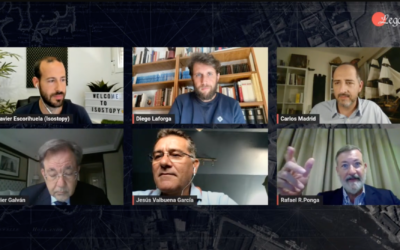
On August 29th, an online presentation of Legacy Project, a virtual reconstruction project of Spanish heritage in the Pacific region, led by Isostopy and Carlos Madrid, a professor at the University of Guam, and an expert in Spanish history in the Philippines and Micronesia.
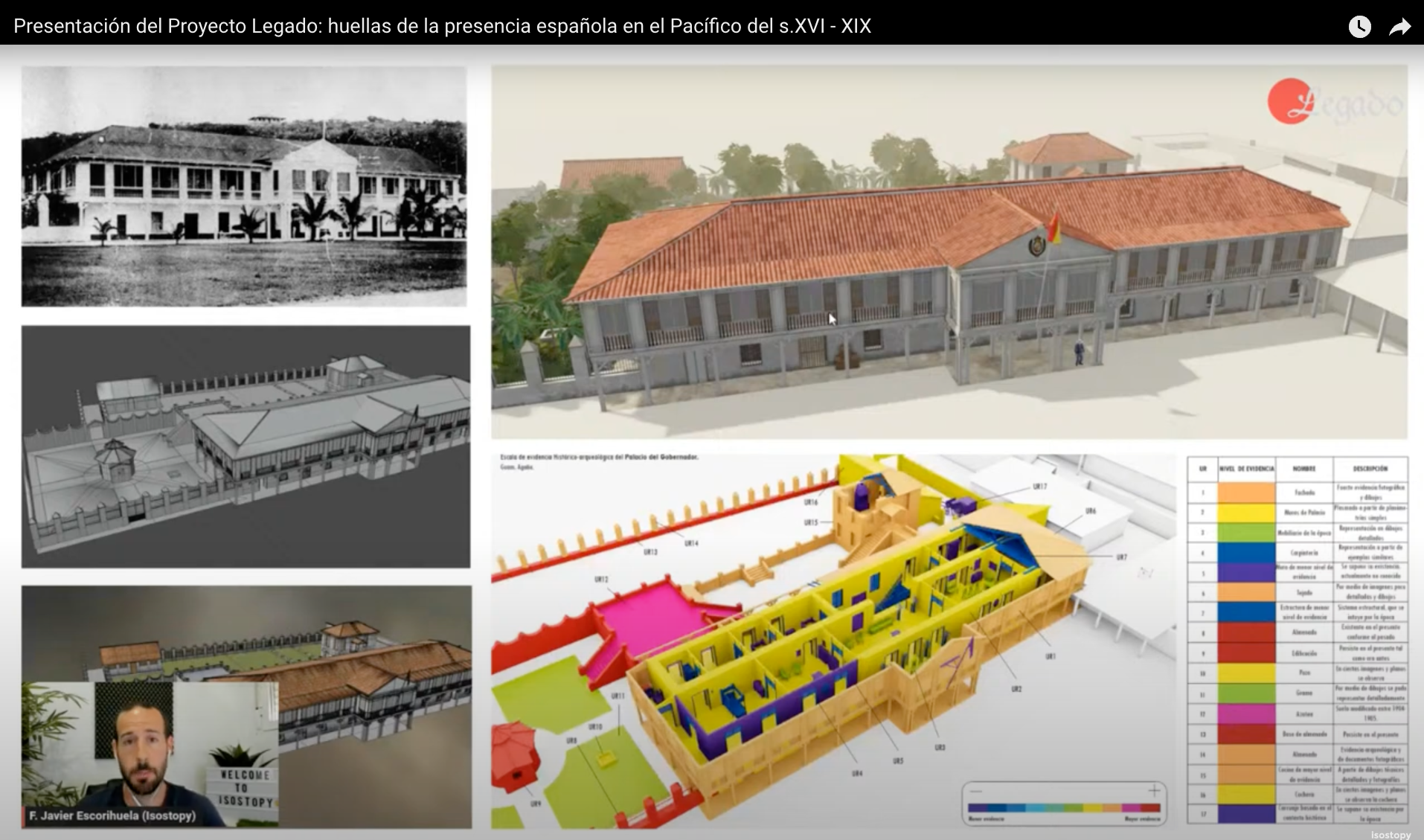
Legacy Project is an initiative designed to transform how we explore and understand history. This project, focused on the virtual reconstruction of Spanish heritage in the Pacific between the 16th and 19th centuries, utilizes immersive technologies such as augmented reality or 3D web to offer users a unique experience: the ability to immerse themselves in key historical moments and virtually visit iconic enclaves of that era.
The presentation, held in a roundtable format and broadcast live via the Isostopy YouTube channel, featured participation from leading experts in history, cultural heritage, and technology who explored both the historical aspects and the technological innovations that make Legacy Project a unique tool for the dissemination of heritage.
Speakers
Rafael Rodríguez Ponga, Rector of the Universidad Abad Oliva CEU of Barcelona and President of the Spanish Association of Pacific Studies, opened the presentation by highlighting the importance of Spanish exploration in the Pacific and how the cultural relationship between Spain, the Philippines, and Guam has endured to this day. He emphasized how Legacy Project not only recovers crucial fragments of history but also strengthens the cultural link between Spain and the Pacific regions, facilitating a greater understanding of this shared past.
Jesús Valbuena, a writer and great-grandson of one of the surviving Spanish soldiers from the famous "Last of the Philippines" episode, spoke about the Battle of Baler and the relevance of this chapter in our history, always
straddling the line between history and myth.
Javier Galván Guijo, Director of the Cervantes Institute in Manila and author of San Ignacio de Agaña, the first city in Oceania, provided his knowledge of Guam and its capital, Agaña, the first European city in Oceania. During his presentation, Galván highlighted how this virtual platform will allow users to explore historically significant places that might otherwise go unnoticed, contributing to a greater appreciation of cultural heritage.
Carlos Madrid, Director of the Micronesia Research Center at the University of Guam and co-author of Legacy Project, offered a deep insight into the historical research underpinning the project. Madrid emphasized the rigor with which the immersive experiences have been recreated, ensuring that every detail is based on solid historical documentation. His presentation clarified that this work is a valuable educational tool that can be used by academics and the general public alike.
Ultimately, Javier Escorihuela, CEO of Isostopy and an architect, explained how immersive technologies, such as augmented reality and 3D web, have been integrated into Project Legacy to create an immersive and accessible user experience. Escorihuela emphasized the potential of these technologies to transform the way we interact with cultural heritage, bringing history to life before our eyes.
A Project Transcending Borders
During the event, the relevance of Project Legacy was extensively discussed, not only for Spain but also for the Pacific communities that share a common historical heritage. Experts highlighted how initiatives like this help preserve historical memory, strengthen cultural ties, and offer new learning opportunities for current and future generations.
"Project Legacy is more than just a technological tool; it’s a bridge between the past and the present, a means of actively and collaboratively exploring our history,” stated Rafael Rodríguez Ponga during his presentation. By combining academic rigor with technological innovation, this project opens up new possibilities for the study and dissemination of cultural heritage, making history more accessible and engaging for everyone.
This meeting presented only the first phase in the exciting journey of Project Legacy, which will soon be completed with the historical reconstruction of Manila intramuros and one of the galleons that made the ‘Galleon de Manila’ route between the Philippines and Mexico.
With a platform available on both mobile applications and a 3D web, this project is intended to become a reference in the virtual exploration of cultural heritage. Undoubtedly, Project Legacy is an invitation to discover, learn, and connect with the rich history of the Pacific from a completely new perspective.
For More Information:
- Website: https://projectlegado.com/
- Presentation Video: https://www.youtube.com/live/AoW7yyC_2-U
- Social Media: @projectlegado
Download:
Android: Legacy https://play.google.com/store/apps/details?id=com.Isostopy.Legado
iOS: Legacy https://apps.apple.com/mx/app/legado-patrimonio-ar/id1628524666