
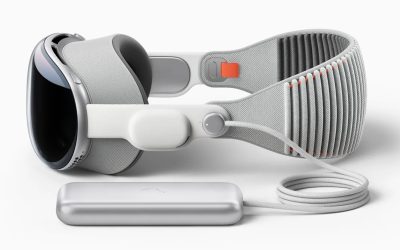
Approximately one month ago, the highly anticipated Apple Vision Pro devices were released – initially only in the United States. Their public unveiling was undoubtedly the major technological event of 2024, despite the remaining launch dates for the rest of the world, should it ultimately occur. Even with its challenges and uncertainties, it’s clear that the Vision Pro devices have not gone unnoticed.
At Isostopy, we were among the first companies in Spain to acquire the new device from Cupertino (on the same day it went on sale, our CEO Javier was at an Apple Store in New Jersey securing a pair of units). Since then, we’ve had ample time to thoroughly explore this device. In this post, we’d like to share our initial impressions of the key technical aspects of this revolutionary visor, whose experience is exceptional.
Resolution and Display
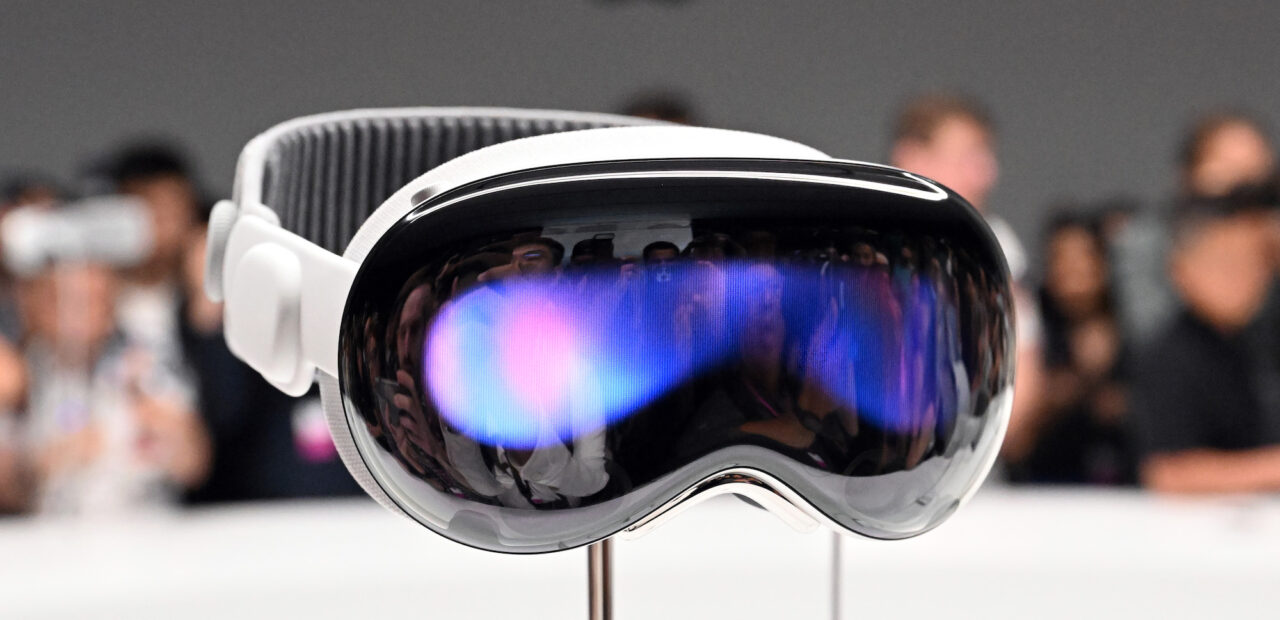
The initial impression of the Apple Vision Pro is due to its impressive design and hardware. There are no other VR headsets that offer superior specifications, sensors, and cameras to those of Apple. The display is a particularly notable strength.
Featuring two Micro-OLED displays with a 4K resolution per eye, the image sharpness is simply exceptional. These two displays combined reach 23 million pixels, according to Apple. OLED technology ensures deep blacks and vibrant colors, while a 120Hz refresh rate provides a surprisingly fluid visual experience, crucial for enhancing the sense of immersion.
Compared to other VR devices such as the Pico 4 or Meta Quest 3, the Apple Vision Pro significantly outperforms in pixel density (a result that’s also to be expected given the substantial price difference).
Sensors and Motion Tracking
The augmented and virtual reality experience of the Vision Pro is further enhanced by the precision of the 5 sensors and 12 cameras, 4 of which are located internally within the visor to accurately track eye movements. A LiDAR depth sensor determines the size and location of objects in the user’s surroundings, precisely mapping their environment and tracking movements with remarkable accuracy. This translates to smoother, more realistic interactions within the virtual world.
Processing and Performance
The heart of the Apple Vision Pro lies in its powerful processors, specifically designed to handle the demanding graphics requirements of augmented and virtual reality.
It features a Chip M2 processor (the same as some of the brand’s laptops) which runs visionOS and provides graphical content, and a Chip R1 processor for collecting and coordinating all information from the cameras, sensors, and microphones, with a capacity to send images to the displays in just 12 milliseconds.
The combination of these processors delivers rapid and efficient rendering of complex graphics, as well as a responsive and interruption-free user experience.
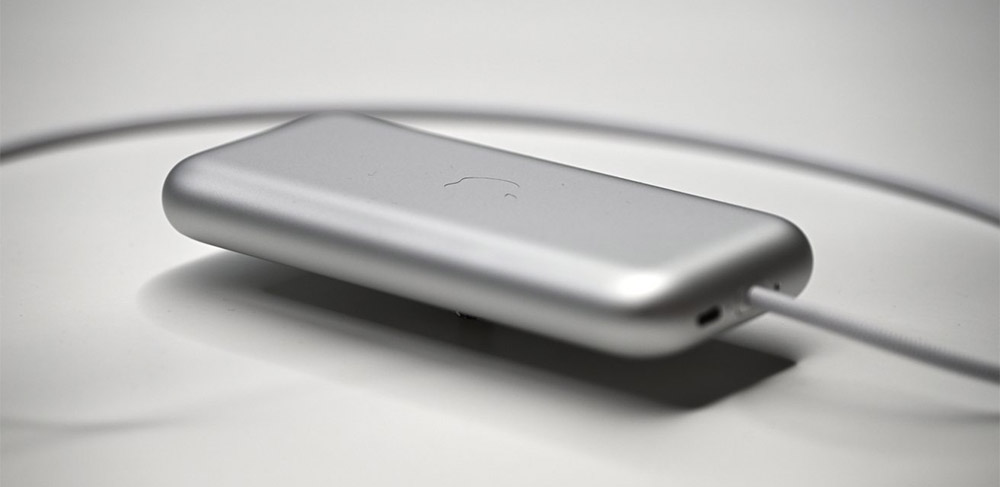
The Apple Vision Pro’s primary differentiating feature is its detachable battery, a portable, miniature flask-shaped unit connected to the device via cable. This design, which has generated discussion, is viewed as a key advantage, reducing the device’s weight, freeing up head space for improved comfort, and offering a more natural viewing experience, particularly for activities like watching movies while reclining or working at a desk.
Compatibility and Ecosystem Integration
Apple has seamlessly integrated the Apple Vision Pro into its existing product ecosystem, facilitating fluid connectivity with devices such as iPhones, iPads, and Macs. This expands development opportunities for application developers and content creators, who can leverage Apple’s development tools and technologies to create immersive experiences for the Apple Vision Pro.
Software and Application Availability
The long-term success of the Apple Vision Pro will largely depend on the availability of a robust software and application library. Currently, the Apple App Store offers a wide selection of augmented and virtual reality optimized content, exceeding 1,000 applications and continually expanding, enabling users to explore diverse experiences. Continued growth in this catalog is crucial to ensure the device’s sustained success.
Future Development and User Adoption
The types of use cases that emerge and the extent to which the Vision Pro becomes integrated into daily routines will be heavily influenced by developers and Apple’s ongoing support. This represents a significant opportunity for the device to establish itself within various sectors, including entertainment, education, and industry.
Conclusion
The Apple Vision Pro represents a significant engineering and design achievement, marking a pivotal step forward in immersive digital experiences. It sets a new benchmark in immersive technology, challenging competitors. With its high-resolution display, powerful processing capabilities, and seamless integration within the Apple ecosystem, the Vision Pro delivers an engaging user experience and unlocks new possibilities across numerous industries. It is arguably Apple’s most ambitious product since the iPhone, though further refinement is expected as a first-generation device.