
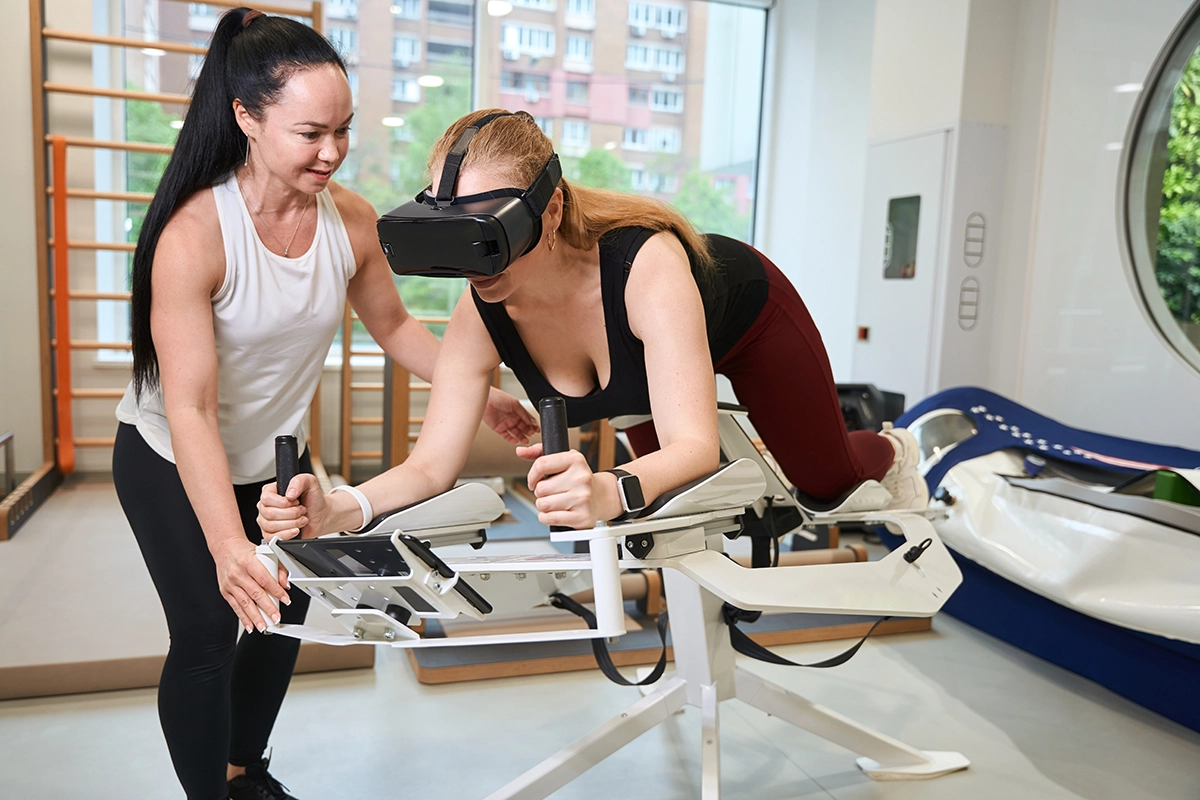
Virtual reality (VR) has evolved beyond entertainment to become a powerful tool within healthcare, particularly in physical rehabilitation programs and supporting individuals with neurodivergent conditions such as Autism Spectrum Disorder (ASD) or Attention-Deficit/Hyperactivity Disorder (ADHD), opening new possibilities for treatment and learning.
Physical Rehabilitation: Precision and Motivation
Through immersive environments, patients can participate in recovery exercises that simulate daily activities. This not only improves movement accuracy but also increases patient motivation and engagement. Sessions can be tailored to each individual's progress and track real-time metrics for healthcare professionals.
Support for Individuals with Neurodiversity
VR provides structured and predictable experiences, ideal for individuals with ASD. It can be used to practice social skills, manage sensory stimuli, or learn daily routines in safe and controlled environments. It is also employed to improve concentration in children with ADHD through interactive dynamics that reinforce sustained attention.
Specific Benefits
- More Engaging and Participatory Therapies
- Reduced Costs Related to Travel and Equipment
- Quantifiable and Real-Time Assessments
- Increased Patient Autonomy in Advanced Stages
The Future of Immersive Healthcare
As this technology becomes more accessible, its implementation in clinics, special education centers, and early intervention programs will become increasingly common. At Isostopy, we believe that content personalization and collaboration with healthcare professionals are key to maximizing the positive impact of VR in this sector.
Case Studies
Applications for Stroke and Brain Injury
- EvolvRehab, a Basque company derived from Virtualware, works with over 300 clinical centers in 22 countries. They offer solutions for arm rehabilitation, fine motor coordination, fall prevention, and more.
- The Apoy@rte project has enabled a smart floor for individuals affected by stroke, combining home automation, biometric sensors, and VR environments to promote safe and autonomous rehabilitation settings.
- The Talionis–CITIC (Universidade da Coruña) group has developed virtual everyday scenarios – kitchen, supermarket, urban garden – for patients with brain injury to practice real-life tasks in a safe environment.
Virtual Reality in Neurodiversity: Autism, ADHD, and More
- The MiniFunKids project offers the first Spanish-language software for infant neuronal stimulation via VR, enabling children with selective mutism to begin speaking from day one.
- In Lorca, the ASTRADE association has implemented the VirtualTEA project, allowing young people with autism to face virtual everyday situations such as going to the supermarket or taking the bus.
- Scientific studies demonstrate that Virtual Reality (VR) environments can be an effective tool for individuals with autism, utilizing physiological measurements to adapt exercises.
- The use of Virtual Reality (VR) for educational purposes to raise awareness of dyslexia, simulating the challenges to foster empathy and inclusion.
Immersive Psychological Therapies
At the Universitat Politècnica de València, the Lableni laboratory develops Virtual Reality (VR) environments for treating phobias, Obsessive-Compulsive Disorder (OCD), anxiety, and Post-Traumatic Stress Disorder (PTSD). These systems monitor the patient's physiological response to effectively adapt the experience.